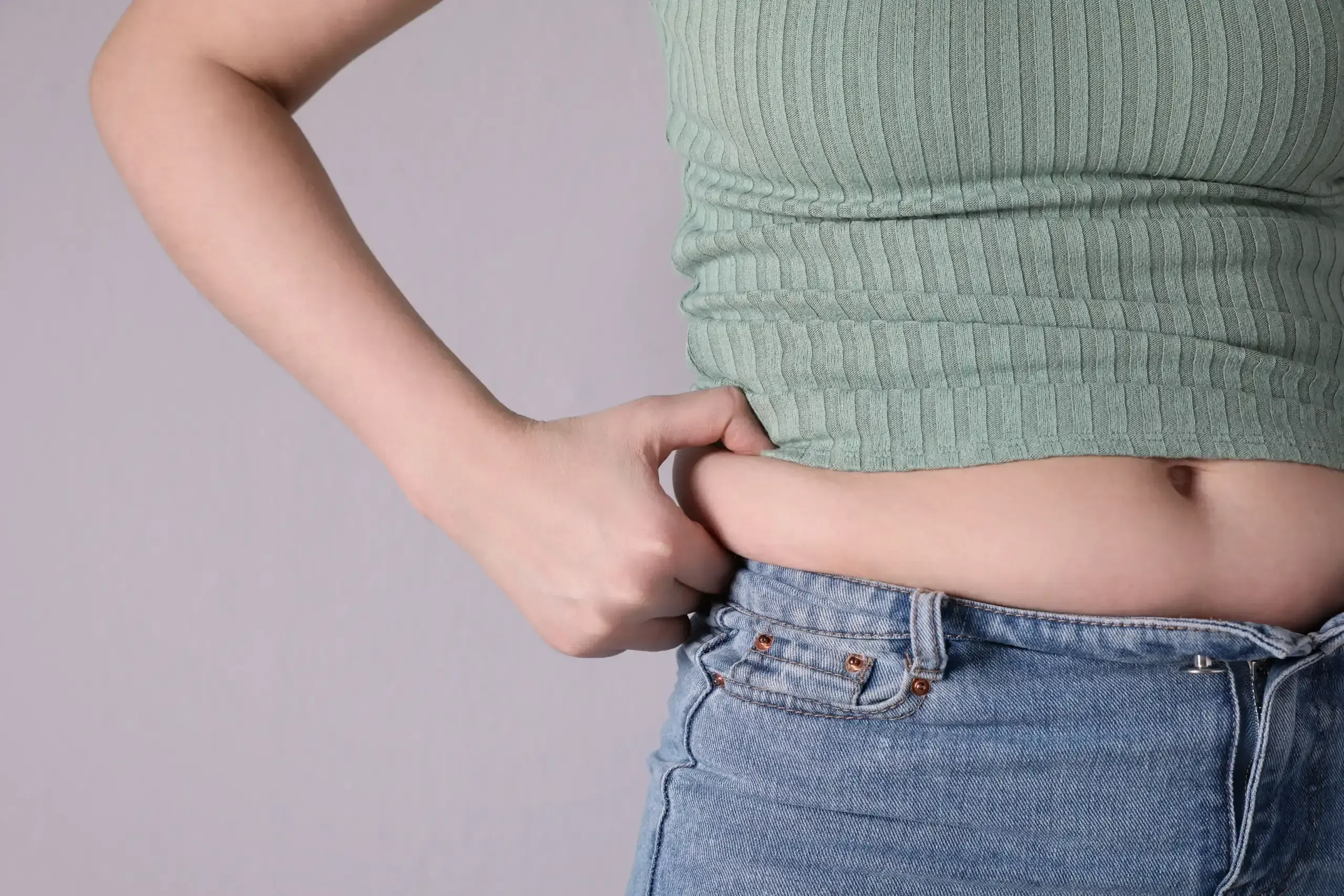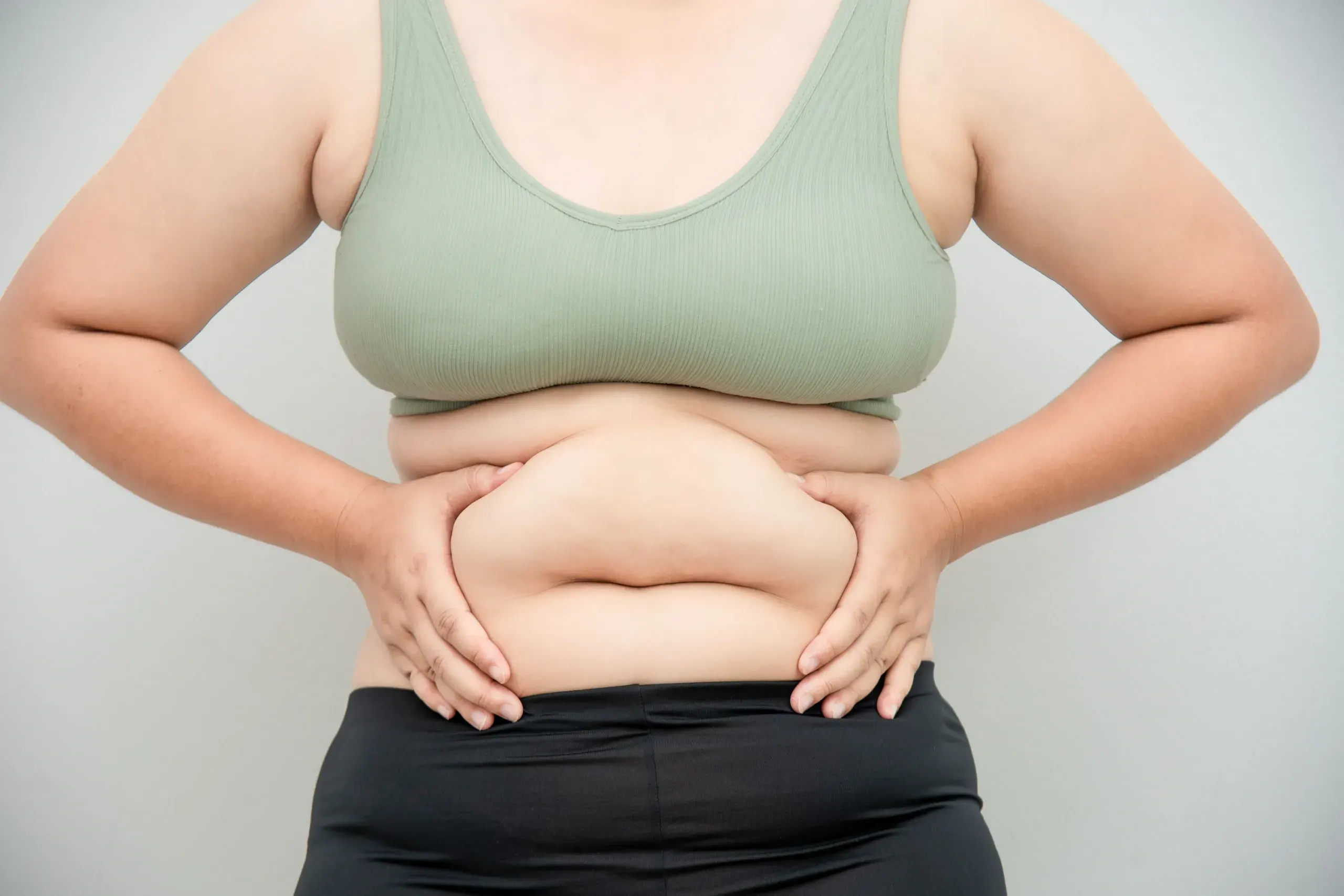



Fat cells, or adipocytes, release stored energy through a process called lipolysis, regulated by beta-adrenergic receptors that promote fat breakdown and alpha-2 receptors that block it. In stubborn fat deposits, alpha-2 receptors can outnumber beta receptors by a ratio of up to 9 to 1, which is why these areas shrink last during weight loss regardless of caloric deficit. The National Library of Medicine documents how receptor distribution and regional blood flow contribute to differential fat loss patterns across the body.
Hormonal shifts compound the problem. Declining estrogen during perimenopause redistributes fat from hips and thighs toward the abdomen, while elevated cortisol from chronic stress promotes visceral fat storage. As muscle mass decreases by roughly 3 to 8 percent per decade after age 30, resting metabolic rate drops and the body burns fewer calories at rest, which makes previously effective routines feel suddenly inadequate.
Resistance training and non-invasive technologies such as Emsculpt Neo address both sides of the equation by reducing targeted fat while rebuilding underlying muscle, directly raising the metabolic floor that diet alone cannot reach.